


If you wear dentures but find that they sometimes move, slip, or make eating certain foods difficult, implant-supported dentures could be a better solution. Unlike traditional dentures, which rest on the gums, implant-supported dentures are anchored to dental implants placed in the jaw. They provide a stable foundation for your denture while still allowing it to be removed for cleaning and care. At Greenfield Dental, this treatment is provided by highly-experienced implant dentist Dr. Lion Berzin.
How implant-supported dentures work
Implant-supported dentures use dental implants to help secure a removable denture in place. The number and position of implants depends on your individual needs and the type of denture being used.
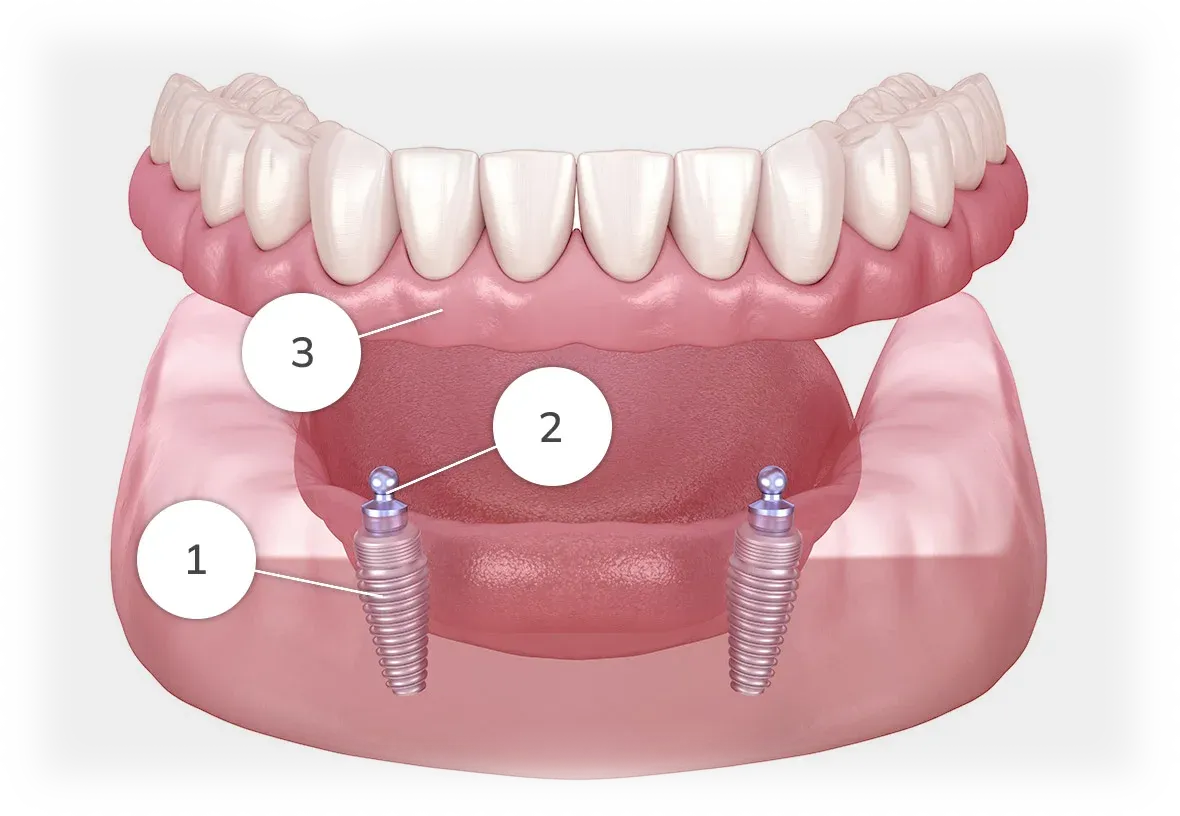
1 Dental implants
Small titanium implants are placed in the jaw to act as stable anchors for your denture. Titanium is strong and integrates well with the surrounding bone.
2 Attachments
Specialized attachments connect the implants to your denture, allowing it to securely snap or lock into place while still being removable.
3 Your denture
Your custom denture is designed to replace your missing teeth and complement your smile. Once connected to the implants, it’s unlikely to move or slip.
The steps in an implant-supported denture procedure
Every treatment is different, but the process always involves several stages. Dr. Berzin will explain each step and make sure you know what to expect before treatment begins.
1 Planning
Careful planning helps ensure your implants are placed with precision. Advanced digital imaging, including Cone Beam CT scanning, provides a detailed 3D view of your jaw, teeth, bone, and surrounding structures. This information allows Dr. Berzin to assess your individual anatomy and plan the placement of your implants with a high degree of precision.
2 Preparation
If necessary, the area may need to be prepared before the implants can be placed. This could include removing a damaged tooth or, in some cases, a bone graft to create a suitable foundation.
3 Implant placement
Once the site is ready, the titanium implants (usually two) are carefully placed into the jaw according to your individualized treatment plan.
4 Healing
The implants need time to integrate with the surrounding bone and become stable foundations for your denture. During this stage, you can wear a temporary or existing denture as your treatment plan allows.
5 Your new denture
Once healing is complete, your custom denture is fitted with the appropriate attachments and connected to the implants. Your new smile is now securely supported while remaining removable for cleaning.
The benefits of implant-supported dentures
Greater stability
Implants help keep your denture securely in place, reducing the slipping and movement that can happen with traditional dentures.
More comfortable eating
A more stable denture can make it easier to chew a wider variety of foods with greater confidence.
More confidence when speaking
Because your denture is anchored to implants, you can worry less about it moving when you talk, laugh, or smile.
Support for your jawbone
Dental implants can help maintain the bone around the areas where teeth have been lost, helping provide a more stable foundation for your denture.
Removable for easy care
Unlike fixed implant dentures, implant-supported dentures can be removed for cleaning and daily care.
Specialized implant expertise.
Close to home.
GDr. Lion Berzin has more than two decades of experience in implant dentistry and is widely recognized for his expertise in the field. His home practice, the Berzin Dental Implant Centre, is in Toronto. We’re proud that he also regularly travels to Greenfield to provide implant treatment for patients in Simcoe and surrounding communities. That means you can access Dr. Berzin’s specialized implant expertise without having to travel for your procedure.

Ready to explore your options?
If your dentures move or feel unstable and you’re wondering if implant-supported dentures are right for you, we’re here to help. Your consultation is the first step to understanding your options and creating a treatment plan that’s right for you.

